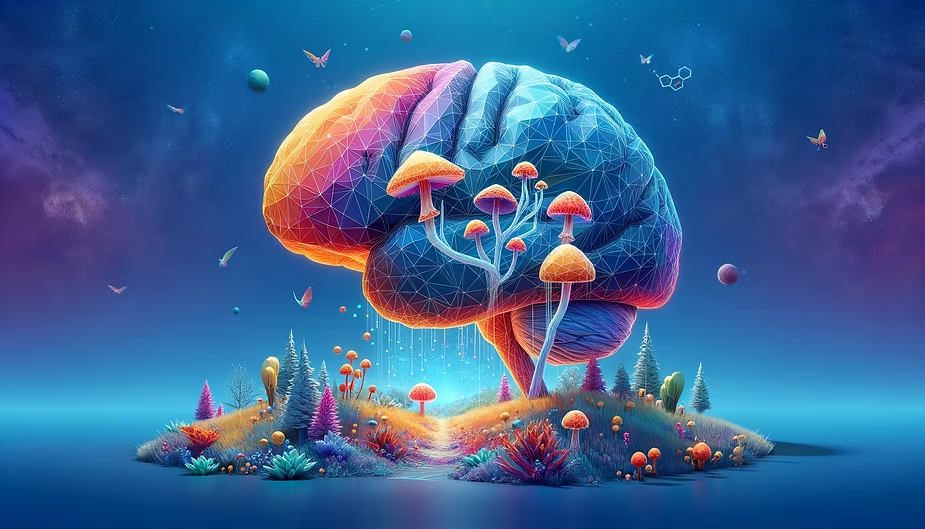
Ever wondered what happens in the Wonderland of your brain when Alice (that’s you) decides to take a tiny, almost imperceptible bite of the magical mushroom? Welcome to the Mammoth Mushrooms guide, where we dive into the rabbit hole (or should we say mycelium network?) to explore the science behind psilocybin. And don’t worry, we’ll keep it as light and digestible as your favorite capsules or gummies, with a sprinkle of humor to keep things interesting.
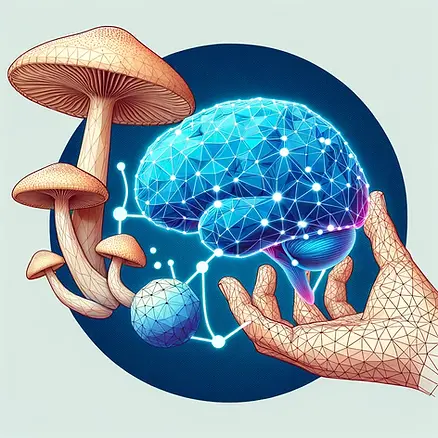
Psilocybin, the active compound found in magic mushrooms, has a fascinating way of chatting up your brain. Think of it as the cool new kid on the block that your brain’s neurotransmitters just can’t wait to hang out with. Once ingested, psilocybin takes a first-class seat straight to your serotonin receptors, specifically the 5-HT2A receptor, which is like the Grand Central Station of mood, perception, and cognition in your brain.
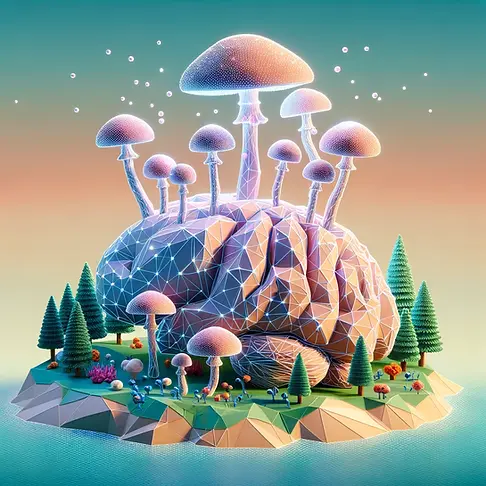
Now, here’s where the magic happens – or science, rather. Psilocybin’s interaction with these receptors leads to a cascade of effects, from altering your sense of time and space to enhancing mood and creativity. It’s like suddenly finding the HD button for your life. Colors become more vivid, sounds more nuanced, and emotions more profound. This cerebral party is what researchers believe contributes to the therapeutic potential of psilocybin, offering promising avenues for treating conditions like depression, anxiety, and PTSD.
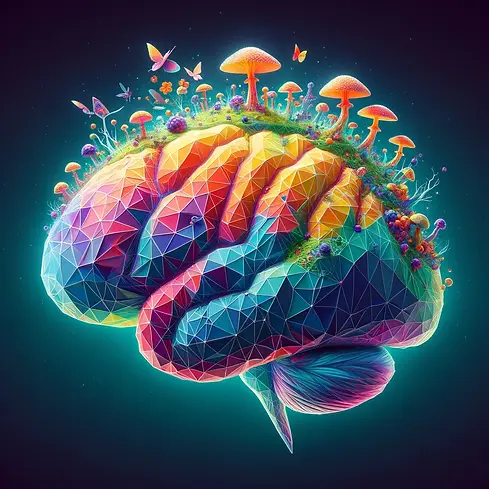
But let’s not forget about neuroplasticity, the brain’s remarkable ability to form new neural connections. Psilocybin is like a personal trainer for your brain, encouraging growth and flexibility. Studies suggest that psilocybin can promote the growth of new dendrites, the branch-like extensions on neurons that help them communicate. It’s as if psilocybin whispers to your brain cells, “You can do it, lift those weights!” leading to improved brain function and mental health. This remarkable ability to form new connections means our brains are constantly adapting, ready to take on fresh challenges and experiences. That same openness to change shows up in all sorts of unexpected places—what https://theworklife.org/e-wallet-casinos-australia/ highlights for Australian audiences is just one example of how flexibility and modern tools influence decisions well beyond the world of neuroscience. Staying receptive to new approaches, whether in brain health or day-to-day choices, helps us keep growing and learning.
For those curious souls in Manitoba or anywhere in Canada looking to buy magic mushrooms online, it’s essential to understand the power and potential of what you’re inviting into your life. Microdosing, the practice of taking sub-perceptual doses of psilocybin, harnesses these benefits without the full psychedelic experience, integrating gently into your daily routine like a subtle background app enhancing your performance.
Navigating this world requires respect for the substance and an appreciation for the delicate balance of our ecosystems, as highlighted in Mushrooms and Nature: A Synergistic Relationship. Remember, whether you’re seeking to enhance creativity, boost mood, or simply explore a deeper connection with the world around you, the journey into the science of psilocybin is as much about personal growth as it is about understanding the intricate dance between our minds and the natural world.
Restricted Site You Need To Verify Your Age To Access The Page
Are you over 19 years of age?vv